What Five Pokémon Cards Taught My Kids About Reconciliation
I had a to-do list this morning. An appointment to get to. A window of time that was already tight before anyone told me it was tight.
Then two of my kids started going at it over five Pokémon cards.
If you have more than one child, you know the sound. The tone that escalates in about four seconds flat. The certainty in both their voices that they were right and the other one was not. I walked in to find both of them fully convinced the cards belonged to them.
I had a decision to make, and it had nothing to do with Pokémon.
The Choice Underneath the Choice
I could have ended it in under a minute. Take the cards away. Hand out a timeout. Move on with my morning and still get my to do list done.
That would have solved the noise. It would not have solved anything else.
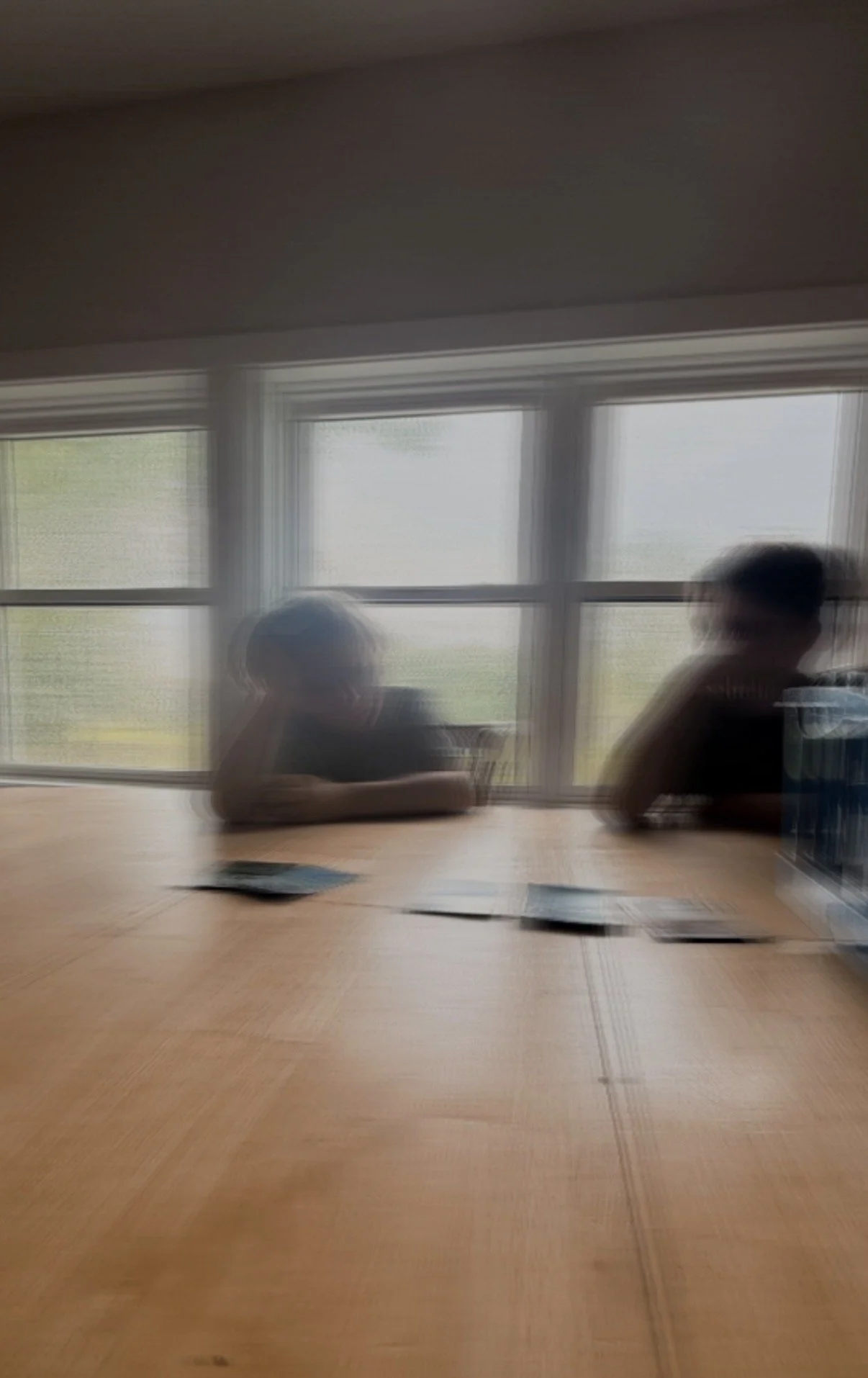
So I asked them to sit down at the table. I sat across from them with the cards between us, and I gave them two options.
They could work out a compromise together, bringing their own ideas to the table and choosing to give something up to reach one. Or I could decide for them, which meant the cards would be thrown away or torn in half so neither of them got what they wanted.
They chose to compromise. Fast.
The Thirty Minutes I Almost Didn’t Give
What followed was not quick, and it was not neat.
We talked about how the words they chose mattered. Offering someone two of your cards sounds different than demanding they hand over theirs. We talked about what it actually means to bring an idea to the table instead of just defending a position. And underneath all of that was something I want them to understand long after Pokémon cards stop mattering: following Jesus means learning to loosen your grip on your own interests for the good of someone else. Philippians 2 tells us not to act out of selfish ambition, but in humility to look to the interests of others. That is a much bigger lesson than who gets which card.
I told them the cards themselves didn’t matter. Pieces of paper never do, in the end. What mattered was how they treated each other while they figured this out.
They brought ideas. They turned each other’s ideas down. They got frustrated. There were tears. There was a moment where neither of them felt heard. And then they landed on something better than what I would have handed them if I’d just decided for them myself: one card for their little brother, who lit up at being included, and two cards each for the two of them.
Five Pokémon cards. Thirty minutes. Tears, frustration, and eventually two kids running off together, laughing, proud of what they’d built.
What This Says About the Correction Rhythm in Your Own Home
Here’s what I keep coming back to. If I had taken the cards away or handed out a consequence, the fighting would have stopped. But would reconciliation have happened? I don’t think so. My kids would have learned that conflict gets shut down. They would not have learned how to work through it, or what it costs to stay in relationship with someone when you don’t get your way.
That’s the difference between simply managing behavior and taking time to shepherd through what is happening underneath it. One is faster. The other creates room to practice something deeper.
I couldn’t make my kids want to compromise. I could only build the space where compromise was possible, sit in it with them, and let them do the work. And even then, compromise itself wasn’t the ultimate goal. I’m not trying to raise children who simply know how to negotiate well. I want them to learn that the person across the table matters more than getting everything they want—that humility, self-control, generosity, repentance, and reconciliation are worth practicing because they reflect the life Christ calls us to.
But I cannot produce those things in their hearts. I can teach what God says. I can correct what needs correcting. I can model repentance when I get it wrong. I can create opportunities to practice what is true. And then I have to entrust the growth to God. That’s true of most of what happens in this house. I can teach, I can model, I can build the rhythm. I cannot manufacture what happens in their hearts when I do. That part isn’t mine to control. It never was.
Not every hard moment in your home is a discipline problem to solve quickly. Not every conflict in your home needs the same response. Sometimes a clear boundary or consequence is exactly what faithfulness requires. But sometimes the thing your children need most is time: time to listen, take responsibility, consider someone else's interests, make something right, and practice reconciliation. Some of them are an invitation to slow down and practice something with your kids that a consequence alone cannot teach.
Where to Take This Next
If this story made you wonder what conflict is teaching in your own home, that is worth paying attention to. Not because every argument needs a thirty-minute conversation or because there is one right correction method, but because repeated moments become rhythms.
When someone fails in your home, what usually happens next? What are your children learning about anger, accountability, grace, repentance, forgiveness, and repair? Does conflict simply stop, or does your family know how to come back together afterward?
Those are some of the questions inside The Home Habit Audit, a free guided resource designed to help you look honestly at what the ordinary rhythms of your home are communicating—not so you can grade yourself as a mother, but so you can see clearly what has actually been entrusted to you.
You cannot manufacture your children's hearts. But you can faithfully steward the home in which those hearts are being formed.
See clearly. Build faithfully. Trust God with the growth.